
Listen To The Podcast Now!
Mistake #1: Creating an Overly Vague PTO Policy:

Implementing a PTO policy that is unclear and vague is one of the most detrimental mistakes businesses can make. Employees become confused and frustrated throughout the company when they don’t know how much time off they have, how to request it, or what constitutes appropriate use.
Why This Matters:
Many organizations rush through PTO policy creation, using generic templates without customizing them to their specific business needs. An unclear PTO policy leads to inconsistent application across departments, which employees quickly perceive as unfair treatment. Managers interpret guidelines differently, resulting in some employees getting approved for vacation tracking requests while others in similar situations get denied.
When employees don’t understand their paid time off benefits, they’re less likely to use them appropriately. Some may hoard their days due to fear of rejection, leading to burnout, while others might abuse the system because they don’t understand the limitations.
How to Fix It:
Create a comprehensive PTO policy document that explicitly outlines every aspect of your time-off program. Specify accrual rates, how employees can check their balances, blackout periods if any exist, the approval process timeline, carryover rules, and what happens to unused time when employment ends.
Your policy should answer common questions before employees need to ask them. Include examples of acceptable and unacceptable PTO use. Make this document easily accessible to all employees through your company’s intranet or employee handbook. Review and update your PTO policy annually to ensure it remains relevant and clear as your business evolves.
Mistake #2: Failing to Track PTO Accurately:

Even the most well-thought-out PTO policy will be ineffective without a strong system for tracking employee time off. Numerous businesses continue to use antiquated techniques like spreadsheets, email requests, and even paper forms, which invariably result in mistakes, disagreements, and administrative nightmares.
The Problem:
Manual tracking methods are prone to human error. HR professionals juggling multiple responsibilities may forget to update balances after approving requests. Employees might submit time-off requests that get lost in crowded email inboxes. Managers may accidentally approve overlapping vacation tracking requests, leaving teams short-staffed during critical periods.
These tracking failures create significant problems. Employees who believe they have available PTO may discover during the approval process that their balance is insufficient, leading to disappointment and mistrust. When multiple team members are approved for overlapping time off because no one checked the schedule properly, the remaining staff face increased workloads and stress.
The Impact on Business:
Not just specific employees are impacted by inadequate employee vacation tracking. Project schedules are thrown off, customer service quality is jeopardised, and managers are forced to make last-minute staffing adjustments. Additionally, HR time that could be used for more strategic projects is wasted due to the administrative burden of manually reconciling PTO records.
The Solution:
Implement a dedicated digital system for pto tracking that automates the entire process from request submission to balance updates. Modern PTO tracking software eliminates manual errors by automatically calculating accruals, deducting used time, and maintaining accurate running balances for each employee.
These systems provide real-time visibility into team calendars, preventing scheduling conflicts before they occur. Managers can instantly see who’s out, who’s requesting time off, and whether approving a request will leave the team adequately staffed. Employees can check their own balances anytime without bothering HR.
Automated tracking also generates valuable reports that help you analyze PTO usage patterns, identify potential burnout risks among employees who never take time off, and forecast staffing needs during peak vacation periods. This data-driven approach transforms your PTO policy from a simple benefit into a strategic workforce management tool.
Mistake #3: Ignoring Legal Compliance Requirements:

PTO policies must abide by several federal, state, and occasionally local regulations; they do not exist in a vacuum. Regretfully, a lot of companies draft their PTO policies without fully comprehending the law, which puts them at significant risk of noncompliance.
The Legal Landscape:
While federal law doesn’t mandate paid time off for most private employers, many states have specific requirements regarding vacation accrual, payout, and usage. Some states classify accrued vacation time as earned wages that must be paid out upon termination. Others prohibit “use it or lose it” policies that force employees to forfeit unused time.
California, for example, treats accrued vacation as earned compensation that cannot be forfeited. Massachusetts requires employers to pay out unused vacation upon termination. Some jurisdictions are implementing mandatory paid sick leave laws that must be tracked separately from general PTO.
Common Compliance Mistakes:
Many businesses develop a single PTO policy and implement it consistently throughout all locations without taking state-specific regulations into account. Others impose “use it or lose it” clauses that go against state laws that safeguard accrued vacation time as compensation. When workers depart the company, some fail to appropriately compute and distribute accrued time.
How to Stay Compliant:
Start by researching the specific PTO-related laws in every state where you employ workers. If you operate in multiple states, you may need different policy versions or additional provisions that ensure compliance everywhere.
Consult with an employment attorney experienced in wage and hour law to review your PTO policy before implementation. This upfront investment can save you from costly legal disputes and penalties later. Your attorney can help you navigate complex questions about accrual caps, payout obligations, and acceptable policy provisions in each jurisdiction.
Build compliance checks into your policy administration. When employees terminate, ensure your payroll system automatically calculates and includes any required PTO payout. Document all policy communications and approvals to protect yourself if disputes arise.
Regular compliance audits should examine whether you’re consistently applying your PTO policy as written and meeting all legal obligations. Consider implementing separate policies for vacation time and sick leave if your state mandates specific sick leave provisions. This separation provides clarity and ensures you meet different legal requirements for each type of time off.
Mistake #4: Creating an Inflexible, One-Size-Fits-All Approach:

The workplaces are growing increasingly diverse, with employees having different needs for time off at various stages of their lives. A strict PTO program where all employees receive the same type of treatment might seem reasonable on paper; however, it will hardly satisfy the real needs of your employees.
A new parent might require some intensive time off to have parental leave, whereas a worker with an aging parent has to have a bit of flexibility in the form of visits to the doctor. The long-term employees usually anticipate higher-paid maternity leave than new workers are given. In situations where your PTO policy fails to support such various needs, you risk losing good employees to companies that are more accommodating to them.
Solution- Building in Appropriate Flexibility:
While maintaining clear guidelines is important, incorporate reasonable flexibility into your PTO policy. Consider implementing tiered accrual rates that reward tenure, allowing employees to earn more time off as they remain with your company. This approach motivates retention while recognizing that experienced employees often need or expect more generous benefits.
Create clear processes for handling special circumstances. Define how employees can request extended leave for major life events like illness, family care, or sabbaticals. Some companies successfully implement hybrid approaches with a baseline PTO policy supplemented by additional provisions for specific situations.
Whatever approach you choose, regularly gather employee feedback about whether your PTO policy meets their needs. Use this input to make informed adjustments that improve satisfaction while maintaining operational effectiveness.
Mistake #5: Poor Communication About Your PTO Policy:

If employees don’t understand the PTO policy, even the most carefully crafted one will be ineffective. Unexpectedly, a lot of businesses put a lot of work into developing thorough policies, but then take minimal action to guarantee that staff members are aware of them.
Communication Gaps:
Some companies simply add their PTO policy to the employee handbook, hand it to new hires during onboarding, and consider communication complete. They never revisit the policy with current employees, leaving long-term staff unaware of changes or unclear on details they’ve forgotten since their first day.
Others communicate policy basics but fail to clarify important details. Employees may know they accrue PTO but not understand exactly how much, when they can use it, or what restrictions apply. Without clear communication, employees make assumptions that often prove incorrect when they try to use their time off.
The Consequences:
Lack of communication means that they keep asking questions that cause the HR staff to be overwhelmed with similar questions. The employees experience frustration when they find out the details of the policies conflict with their assumptions, such as learning about blackout periods when planning a holiday travel, or getting to know that the time they have accrued will not roll over as they had imagined.
There is also the issue of misconceptions that create issues of fairness. The situation where there are employees who are aware of policy nuances that others do not get, comes out to be that some employees are provided with preferential treatment. Such an impression destroys morale and trust even when the management is indeed implementing the PTO policy in a uniform manner.
Effective Communication Strategies:
Create multiple communication touchpoints to ensure every employee understands your PTO policy thoroughly. During new hire onboarding, dedicate time to explaining the policy in detail, not just handing over documents. Walk through specific examples of how accruals work, the request process, and common scenarios they might encounter.
For current employees, implement annual reminders about PTO policy details, especially around year-end when many workers plan their vacation time or use remaining balances. When policy changes occur, announce them clearly through multiple channels, email, team meetings, and your intranet, rather than simply updating handbook documents.
Make policy information easily accessible. Create a dedicated section on your employee portal where staff can quickly find answers to common questions without submitting HR tickets. Consider developing short video explanations that walk through complex aspects like accrual calculations or the request approval workflow.
Encourage managers to regularly discuss PTO with their teams. Supervisors should proactively remind employees to use their paid time off to prevent burnout and ensure everyone understands they’re encouraged to take the time they’ve earned. Managers should also be thoroughly trained on the policy so they can answer questions accurately and consistently.
Finally, create feedback mechanisms so employees can ask questions or request clarifications without judgment. An anonymous suggestion box or regular pulse surveys can reveal communication gaps you didn’t know existed. This ongoing dialogue helps you refine both your PTO policy and how you communicate it.
Also Read:
Streamline Your PTO Management with EmpCloud:
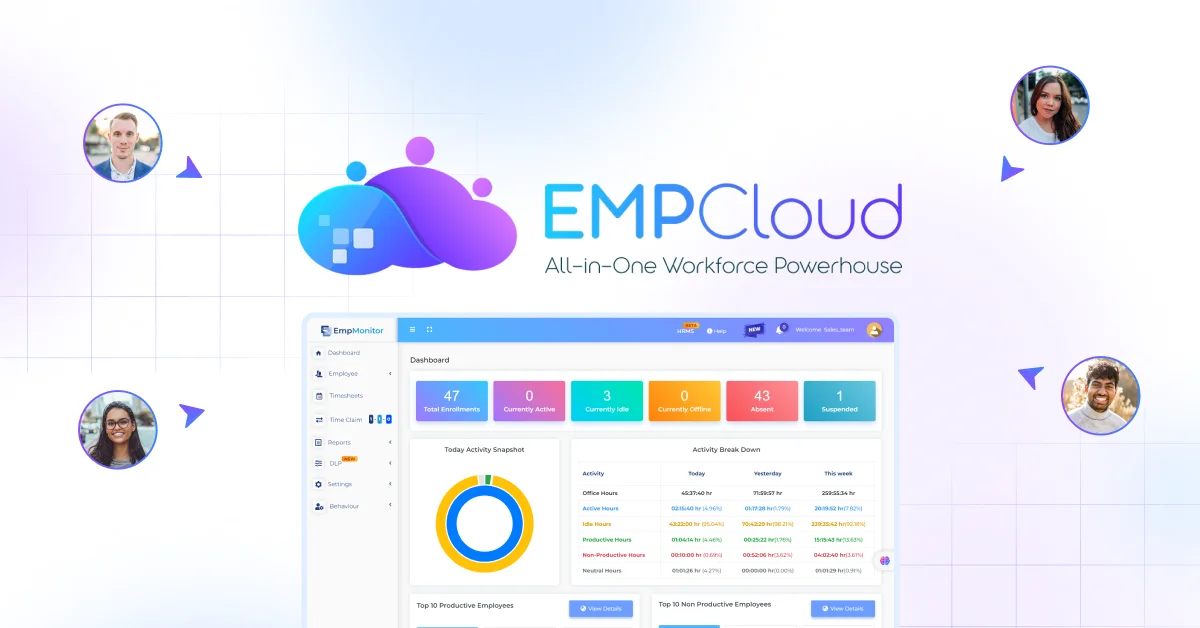
Managing paid time off doesn’t have to drain HR time or frustrate employees. EmpCloud simplifies PTO management by bringing automation, visibility, and compliance into one unified system.
How EmpCloud Helps You Manage PTO Better:
- Centralised Leave Management: Employees can apply for leave, managers can approve or reject requests, and HR can oversee everything from a single dashboard.
- Real-Time PTO Balance Visibility: Employees always know how much PTO they have left, reducing confusion and repetitive HR queries.
- Team Availability & Conflict Prevention: Managers can view team calendars in real time to avoid approving overlapping leaves that disrupt operations.
- Policy & Compliance Support: EmpCloud helps enforce PTO rules consistently while supporting compliance with location-specific regulations and payout requirements.
- Integrated Productivity Monitoring: Beyond PTO, EmpCloud also works as an employee monitoring software, helping organisations track productivity, optimise performance, and maintain accountability.
With an intuitive interface and automated workflows, EmpCloud removes the administrative burden of manual PTO tracking and ensures your policy is applied fairly, transparently, and efficiently across the organisation.
Conclusion:
The development of an efficient PTO policy must be planned, communicated, and the right tools must be managed effectively. The five most frequent pitfalls, the undefined policies, lack of tracking, neglect of compliance, inflexibility, and communication, can be avoided to build a system that is beneficial to both the employees and the organization. A well-crafted policy on PTO will show that you care about the well-being of your employees but still manage the performance of your business to support its success.
FAQ’s:
Q1: How often should I update my PTO policy?
Ans: Review your PTO policy annually to ensure compliance with changing laws and alignment with your business needs. Make updates whenever significant legal changes occur or employee feedback indicates improvements are needed.
Q2: What’s better: separate vacation and sick leave or combined PTO?
Ans: It depends on your state’s legal requirements and company culture. Combined PTO offers simplicity, while separate banks may be required in states with specific sick leave mandates. Consult an employment attorney to determine what works best for your situation.
Q3: Should we implement unlimited PTO?
Ans: Unlimited PTO can work well in certain cultures but requires clear guidelines and supportive management. Evaluate whether it aligns with your company’s values and operational needs before implementing this approach.
Quick Search Our Blogs
Type in keywords and get instant access to related blog posts.