
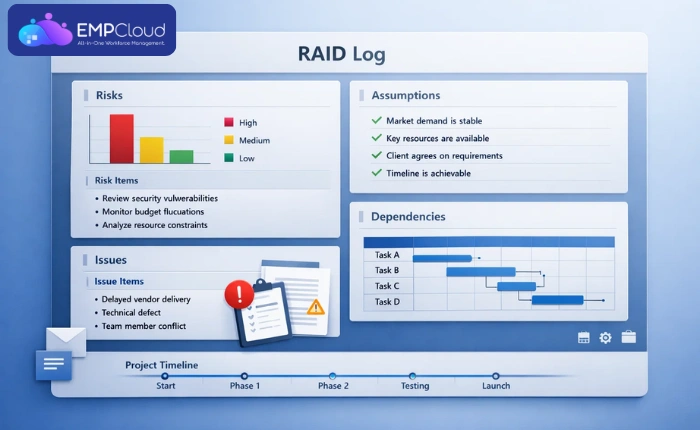
Strong project control separates successful teams from confused teams. Clear structure ensures steady progress, confident decisions, and predictable outcomes. A RAID log supports that structure perfectly. It gives leaders a simple but powerful way to control risk, clarify expectations, remove confusion, and guide teams with confidence. When teams maintain a RAID log consistently, projects move forward with control rather than chaos.
In a hurry? Listen to the blog instead!
What Is A RAID Log And Why Does It Matter?
Every project involves change. Timelines adjust, priorities shift, decisions evolve, and unexpected challenges arise. To manage this complexity, teams need a single, dependable system that captures all critical factors influencing progress. That’s where a RAID log becomes essential.
A RAID log—short for Risks, Assumptions, Issues, and Dependencies—is a structured tracking framework that helps teams monitor uncertainty and maintain control. It gives managers clarity for decision-making, keeps teams aligned on priorities, and allows stakeholders to understand progress and obstacles at a glance. Instead of reacting to problems, teams gain the ability to anticipate and manage them effectively.
What Does A RAID Log Include?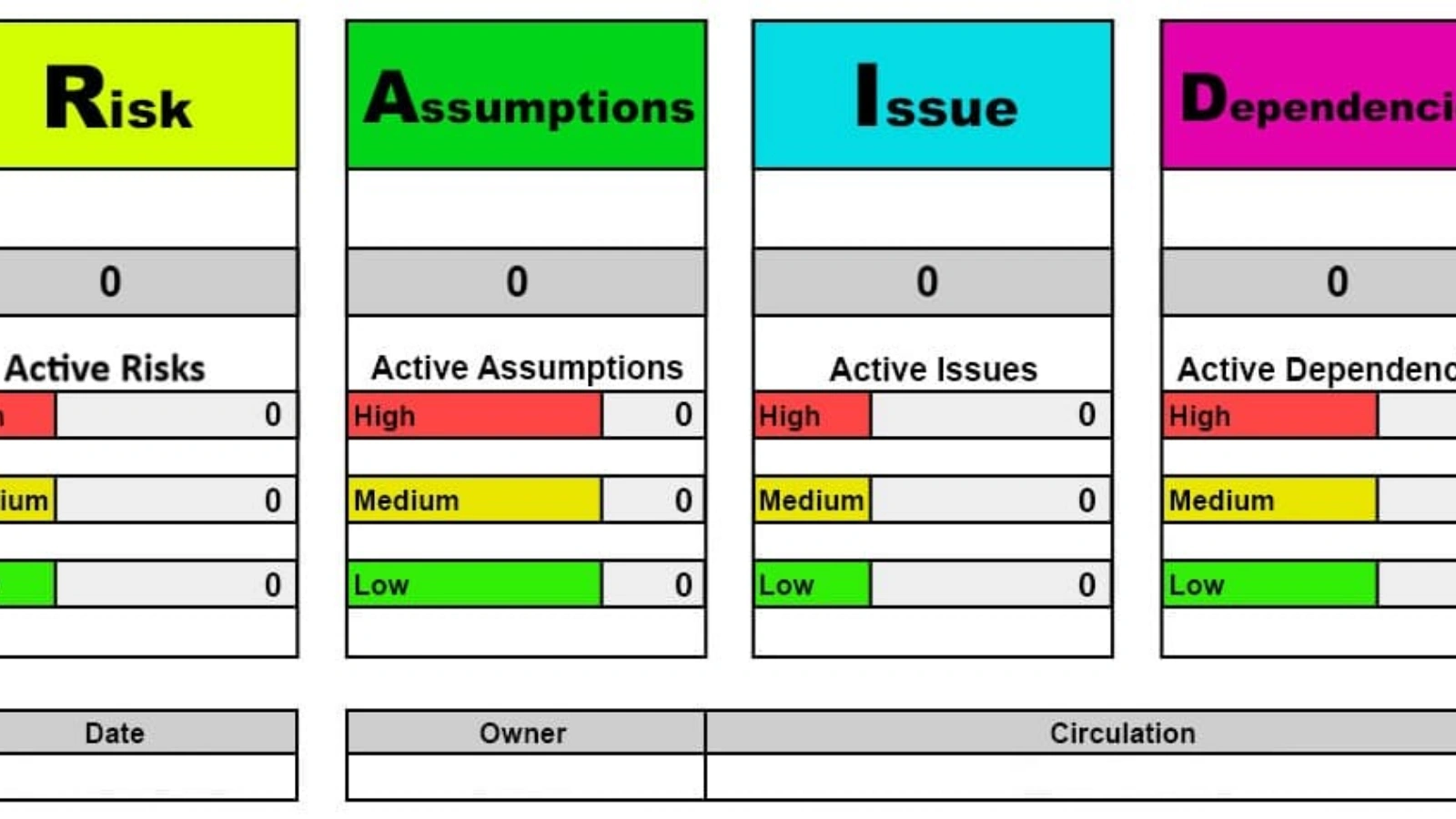
A RAID log is built around four core elements that influence project outcomes. Each element serves a specific purpose in keeping work organized, predictable, and on track.
Risks
Risks include every possible threat that may delay timelines, increase costs, spoil quality, or disturb stability. A RAID log captures each risk with probability, impact, priority, owner, and response strategy so teams recognize dangers early, prepare actions in advance, reduce uncertainty, and keep projects moving confidently forward at every stage.
Assumptions
Assumptions describe conditions teams believe will remain true, such as available resources, supportive stakeholders, realistic timelines, steady budgets, and smooth approvals. A RAID log records them transparently so expectations stay aligned with reality, helping managers adapt plans, reduce surprises, make smarter decisions, and guide the project safely ahead for success.
Issues
Issues are current problems already affecting project progress, including delays, failures, conflicts, shortages, or technical breakdowns. A RAID log assigns accountable owners, defines corrective actions, tracks resolution status, and drives timely responses so disruptions shrink quickly, productivity stays stable, and the project regains clarity, momentum, and control for steady delivery.
Dependencies
Dependencies highlight tasks that rely on other work, approvals, tools, or teams to proceed. A RAID log maps every dependency with owners, timelines, and conditions, strengthening coordination, improving planning precision, preventing bottlenecks, maintaining realistic schedules, and ensuring the project flows in the correct sequence without last-minute surprises for smoother execution.
These four elements give every RAID log its strength. Teams stay aware, alert, and prepared.
Understanding RAID Log In Project Management
A RAID log in project management works like a command center that keeps everything organized, visible, and under control. It helps leaders monitor real progress, understand challenges, and make informed decisions without confusion. Teams gain clarity about risks, assumptions, current issues, and dependencies, so they respond early instead of reacting late.
Everyone stays aligned because the RAID log connects every point to responsible owners, timelines, and actions. This structure supports accountability, teamwork, and discipline throughout the project lifecycle. With a RAID log in project management, teams work with confidence, avoid surprises, and move every project toward successful completion with clarity and direction.
Why Do Modern Businesses Need RAID Logs?
Modern businesses deal with fast changes, competition, complex structures, and constant pressure to deliver. Raid logs help leaders stay ahead of uncertainty.
Businesses need RAID logs because they:
- Support better decision-making
RAID logs give leaders a clear picture of risks, assumptions, issues, and dependencies, so choices come from facts, not guesses. - Prevent last-minute crises
They highlight threats early, show warning signs quickly, and help teams respond on time, so problems never grow into emergencies. - Bring transparency to communication
Everyone sees the same information in one place, reducing confusion, avoiding misunderstandings, and building trust across managers, teams, and stakeholders. - Improve accountability
Each risk, assumption, issue, and dependency has an owner, timeline, and action plan; responsibility stays clear, and performance improves consistently. - Strengthen planning ability
Leaders understand challenges, prepare realistic strategies, align resources correctly, and guide projects confidently, since the RAID log shows what matters.
A RAID log creates stability. Teams stop reacting. They start leading.
Also Read:
What Is Project Tracking? The Ultimate Guide For Businesses
How To Master Business Process Optimization For Growth?
Step-By-Step Guide: How To Build Effective RAID Logs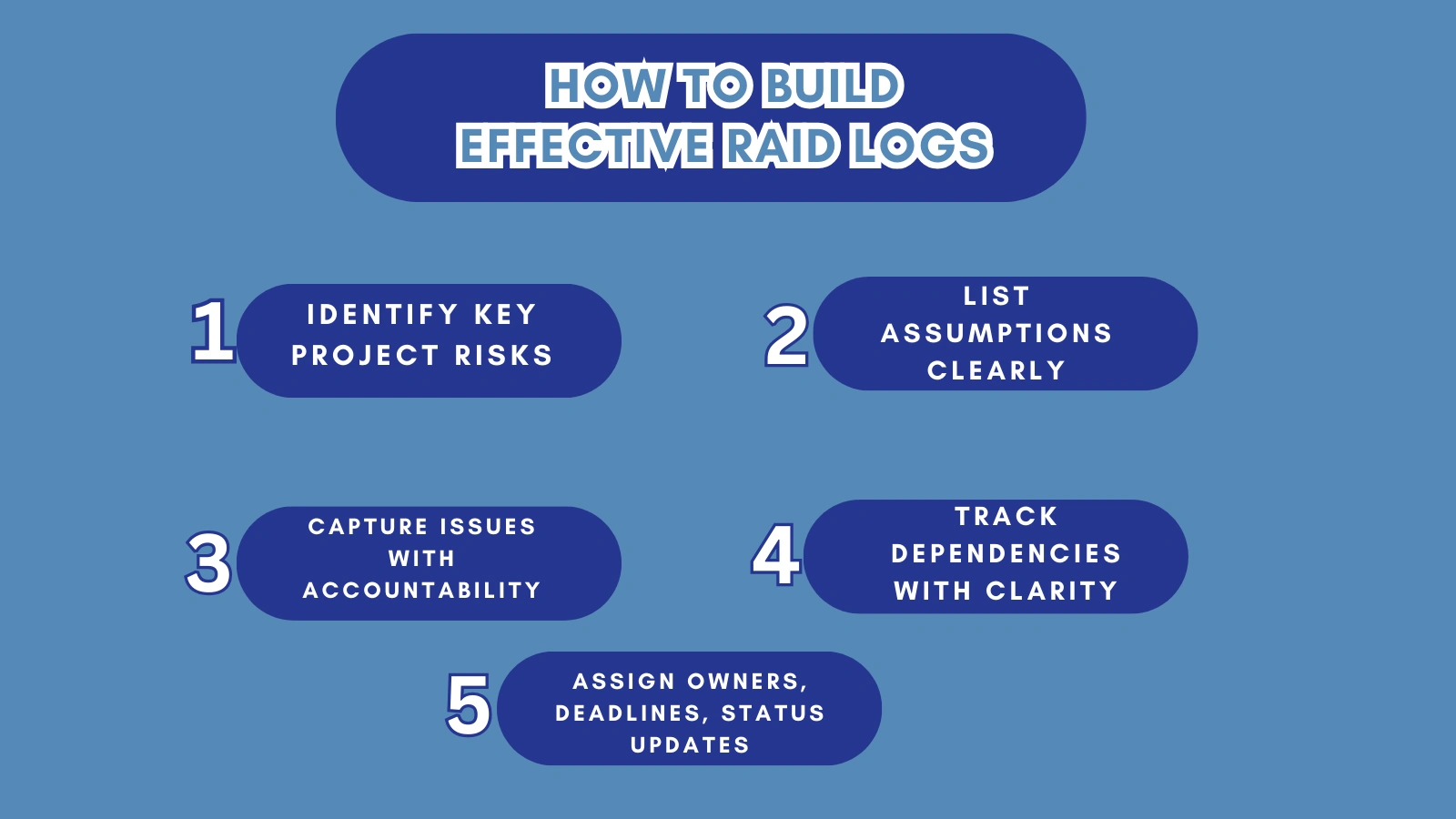
A RAID log delivers results only when teams build it correctly. Follow this structured system to build a RAID log that works.
Step 1 – Identify Key Project Risks
Look ahead. Understand everything that might go wrong. Note every possible risk. Include details like:
- What could happen?
- Why could it happen?
- How serious does it look?
- What action will solve it?
Strong risk clarity allows the RAID log to protect the project before trouble hits.
2 – List Assumptions Clearly
Assumptions exist in every project. Teams expect certain situations to stay stable. Leaders must write those assumptions clearly inside the RAID log. Clear assumptions help when plans change. Everyone understands why the decisions happened.
3 – Capture Issues with Accountability
Issues already impacting the project need immediate attention. Add each issue to the RAID log. Assign responsibility. Set resolution direction. Keep the team aware of every ongoing challenge.
4 – Track Dependencies with Clarity
Dependencies decide flow. One activity relies on another. Failure in one area affects other areas. A RAID log highlights every dependency, so no step falls apart silently.
5 – Assign Owners, Deadlines, Status Updates
A RAID log only works when accountability exists. Assign ownership. Set timeframes. Track updates. Clear responsibility ensures strong execution.
Best Practices To Manage And Maintain Raid Logs
A RAID log supports success only when teams manage it consistently and use it actively. Follow these disciplined practices to ensure accuracy, visibility, and meaningful decision-making throughout the project journey.
Regular Updates
A RAID log delivers real value only when it stays current. Update it at every milestone, after major discussions, and whenever conditions change. Frequent reviews, refined details, and accurate status tracking ensure the RAID log reflects reality instead of outdated assumptions, helping leaders respond faster and smarter.
Team Communication
A RAID log works best when it becomes a shared responsibility, not just a manager’s document. Discuss it regularly in meetings, invite inputs, clarify accountability, and ensure everyone understands risks, assumptions, issues, and dependencies clearly. This improves awareness, builds ownership, encourages collaboration, and keeps the entire team aligned.
Documentation Discipline
Clarity matters. Maintain structured, clean, and precise RAID entries so teams can read and act without confusion. Avoid vague descriptions and incomplete data. Use defined formats, accurate information, priority indicators, and consistent terminology to support confident decisions and ensure nothing gets misunderstood or ignored.
Using Automation & Tracking Tools
Modern automation and project tracking platforms make RAID management easier and more powerful. They centralize RAID data, simplify updates, improve visibility, reduce manual effort, and generate real-time insights. This helps leaders monitor risks, handle issues proactively, and maintain stronger control over project execution.
How Can EmpCloud Help You Improve Project Visibility, Collaboration & Overall Control?
EmpCloud empowers teams to work with more clarity, accountability, and confidence by providing a connected workspace where everything stays organized, visible, and easy to manage.
Key Capabilities You Benefit From:
- Centralized Workspace – Keep tasks, activities, resources, and updates in one structured place for quick visibility.
- Real-Time Dashboards – Monitor progress, performance, and ongoing activities with live, data-backed insights.
- Team Collaboration – Support smoother teamwork with shared access, communication tools, and aligned workflows.
- Automated Processes – Reduce manual effort through workflow automation, smart tracking, and built-in efficiencies.
- Performance & Productivity Monitoring – Gain clarity into team output, workload balance, and execution speed.
- Secure Data & Role-Based Access – Ensure information is safely managed with permission-based access control.
- Alerts & Notifications – Stay ahead with timely reminders, real-time alerts for anomalies or risks, and instant notifications for important updates.
- Comprehensive Reporting – Turn data into actionable insights with detailed reports, logs, and analytics.
If you prefer a more concise, technical, or marketing-oriented approach, please let me know.
Common Mistakes To Avoid When Using Raid Logs
Some mistakes reduce the effectiveness of RAID logs, making them less reliable and harder to use. Avoid these common pitfalls to maintain clarity, accuracy, and control throughout your project.
Ignoring Updates
When teams fail to update RAID logs regularly, information quickly becomes outdated and unreliable. Risks, issues, assumptions, and dependencies constantly evolve, so the log must be reviewed and refreshed frequently to ensure decisions reflect the true project situation.
No Accountability
When RAID log entries do not have clear ownership, they get ignored or remain unresolved. Every risk, issue, and dependency needs a responsible person assigned. Defined accountability ensures timely action, faster response, better tracking, and prevents important tasks from being forgotten.
Overcomplicated Format
A RAID log loses effectiveness when it becomes overly complex, cluttered, or difficult to understand. Teams should always keep it simple, structured, and readable. A clean, logical format helps stakeholders understand priorities instantly and take the right action without confusion.
Poor Documentation
Weak, incomplete, or unclear documentation inside a RAID log leads to misunderstandings, mistakes, and project delays. Every entry should include complete details, context, and clarity so teams can interpret information correctly, collaborate better, and make more confident, data-backed project decisions.
Real-World Examples Of Raid Logs In Action
A RAID log proves its value across diverse project environments, helping teams track risks, issues, assumptions, and dependencies efficiently. It ensures clarity, accountability, and smooth execution in complex workflows.
IT / SaaS
Technology and SaaS teams manage product releases, feature updates, bug fixes, and security tasks efficiently. A RAID log provides structured visibility, ensures timely interventions, and prevents disruptions during fast-paced deployments.
Enterprise Projects
Large organizations juggle multiple teams, high-value budgets, and complex deliverables. RAID logs offer transparency, central tracking, and alignment across departments, enabling smooth execution and minimizing risks or missed dependencies in big projects.
Remote / Hybrid Project Teams
Distributed teams rely on a single, structured RAID log as a source of truth. It ensures everyone understands risks, issues, dependencies, and assumptions, promoting collaboration, accountability, and consistent communication despite physical distances.
Final Thoughts:
RAID logs serve as a central tool for managing project risks, assumptions, issues, and dependencies effectively. They provide clarity, strengthen accountability, and enhance communication among teams and stakeholders. By offering a structured approach, RAID logs allow leaders to anticipate problems, make informed decisions, and prevent delays.
Teams using RAID logs remain aligned, organized, and proactive, delivering projects on time, within budget, and according to quality standards. Consistent use of RAID logs drives predictable, successful outcomes and business growth.
FAQs
- What is a RAID log in project management?
A RAID log in project management records risks, assumptions, issues, and dependencies in a structured format. It helps teams stay organized, ensures clarity, supports accountability, and enables informed decision-making throughout the entire project lifecycle. - What are RAID logs used for?
RAID logs are used to track uncertainties, monitor evolving project conditions, and prevent unexpected disruptions. They help leaders maintain visibility, understand potential challenges, ensure transparency, and guide teams toward better control, coordination, and execution of project activities. - Why do teams need RAID logs?
Teams need RAID logs to strengthen communication, document challenges effectively, assign responsibilities clearly, and maintain structured project planning. They help teams stay proactive, aligned, and prepared, which ultimately increases the chances of successful project delivery without confusion or delays. - Is a RAID log necessary for every project?
Most projects encounter uncertainties, risks, dependencies, or unexpected hurdles. A RAID log brings structure and discipline, helping teams manage these elements better. It supports predictability, improves control, and contributes to smoother project execution, regardless of project size or complexity. - Who is responsible for maintaining a RAID log?
Project managers usually manage the RAID log, but responsibility is shared across the team. Stakeholders, team members, and leaders must contribute accurate updates, review entries regularly, and ensure every recorded item has ownership and timely follow-up.
Quick Search Our Blogs
Type in keywords and get instant access to related blog posts.