
Employee engagement has become a deciding factor for business success. Companies today cannot rely only on salary, basic benefits, or traditional HR management anymore. Modern employees want meaningful work, emotional connection, recognition, growth, and trust in leadership. When a company understands how engaged its people are, performance increases automatically. This is why organizations now prioritize tracking employee engagement metrics instead of relying on assumptions.
Many leaders feel confident about company culture until they measure it. Some discover employees feel disengaged or disconnected from purpose. Others find motivation dropping silently under workloads and stress. Understanding the truth begins with learning how employee engagement metrics reveal patterns, strengths, and weaknesses in a workplace.
This blog is a detailed roadmap for organizations wanting to transform their engagement strategy using accurate data, proper planning, and modern HR technology.
Listen To The Podcast Now!
Why Does Employee Engagement Matter?
The workforce has changed permanently. Employees no longer stay simply because they need income. They stay because they feel valued, supported, and involved. When engagement strengthens, it improves culture, productivity, retention, customer satisfaction, revenue, and teamwork.
Organizations with strong engagement numbers consistently outperform competitors. They innovate faster, grow stronger, and attract better talent. Leaders understand that using employee engagement metrics keeps them aware of internal performance and enhances performance management before problems become expensive.
Employee engagement today does not revolve around superficial perks. It revolves around emotional connection, career purpose, and mutual trust. Tracking employee engagement metrics lets HR teams understand what motivates people and why they choose to stay or leave.
What Are Employee Engagement Metrics?

Employee engagement metrics are measurable indicators revealing how committed, satisfied, and emotionally connected employees feel toward their organization. These numbers help leaders evaluate motivation levels, performance quality, productivity patterns, and cultural alignment.
The purpose of employee engagement metrics is not to control employees. Metrics exist to diagnose culture strength and improve workplace experience.
Companies use different employee engagement metrics to evaluate:
- Motivation and morale
- Internal communication
- Manager trust levels
- Career development success
- Productivity behaviour
- Loyalty
When these numbers improve, leaders know their culture is functioning correctly. When they drop, companies gain early warning signals.
Also Read:
Building A Performance Management System That Employees Actually Love
The Core Value Of Employee Engagement Metrics In Business Strategy?

Data-driven engagement management saves companies millions every year. Instead of guessing what employees want, companies can measure what they truly need and make strategic decisions backed by evidence. Strong employee engagement metrics improve workplace happiness, motivation, and overall profitability.
Some powerful business outcomes include:
Higher productivity:
By understanding which teams or individuals are most engaged, companies can optimize workflows, allocate resources efficiently, and create environments that encourage focus and innovation.
Lower turnover:
Tracking engagement trends helps identify employees at risk of leaving. Companies can address concerns proactively through recognition, career growth opportunities, and targeted retention strategies.
Better customer service:
Engaged employees are more committed to delivering high-quality work. They provide better customer experiences, respond faster to client needs, and represent the brand positively.
Reduced conflict:
Measuring engagement uncovers friction points within teams or departments. Leaders can implement conflict resolution strategies, improve communication, and foster collaboration before issues escalate.
Stronger innovation:
Employees who feel valued and heard are more likely to contribute creative ideas. By analyzing engagement metrics, companies can identify innovation champions and support initiatives that drive growth.
Healthier teams:
Engagement data reveals team dynamics, workload balance, and morale levels. Companies can use this insight to implement wellness programs, encourage work-life balance, and ensure sustainable team performance.
The difference between struggling organizations and successful ones often comes down to whether they track their employee engagement metrics consistently and take actionable steps based on the insights.
How Employee Engagement Metrics Improve Productivity?
Employees who feel emotionally attached to their jobs show higher concentration, smarter time usage, collaborative behaviour, and eagerness to contribute new ideas. Properly selected employee engagement metrics help leaders understand:
- Why motivation rises
- What reduces output
- When burnout begins
- Where performance improves
- How culture influences goals
Workers want clarity, recognition, and fairness. When companies analyze employee engagement metrics, they discover hidden challenges like broken communication loops, recognition gaps, workflow stress, and skill development needs.
To make engagement tracking more structured and data-driven, many organizations are moving away from spreadsheets and manual tracking. Platforms like EmpCloud provide a unified solution by combining onboarding, attendance, productivity analysis, timesheets, field tracking, and performance monitoring in a single intelligent system.
By connecting these workflows, companies gain clearer visibility into employee behaviour and sentiment, helping HR teams identify productivity patterns, morale trends, and task efficiency in real time, eliminating guesswork and enhancing overall engagement accuracy.
Why Companies Fail Without Employee Engagement Metrics?
Many struggling companies lack feedback systems. They depend on assumptions instead of measurement. Without structured employee engagement metrics, organizations overlook warning signs such as:
- Burnout
- Staff frustration
- Poor morale
- Leadership gaps
- Team isolation
- Communication breakdowns
Without data, culture weakens silently.
Types Of Employee Engagement Metrics Every Company Must Track
Different companies use different indicators, but most follow similar foundational employee engagement metrics categories. Using the right employee engagement ideas can help organizations choose which metrics to track effectively.
eNPS (Employee Net Promoter Score):
Measures how likely employees are to recommend the company. High scores indicate loyalty and satisfaction, while low scores signal areas for cultural improvement.
Absenteeism Rate:
Tracks employee attendance patterns. Frequent absences can indicate disengagement, low morale, or burnout and help managers address issues proactively.
Satisfaction Index:
Reflects overall happiness and motivation at work. A high index usually correlates with productivity, collaboration, and positive workplace culture.
Turnover Rate:
Shows how often employees leave the organization. Monitoring turnover helps identify teams at risk and highlights areas where engagement efforts may be needed.
Performance Output Metrics:
Connects employee effort, skill growth, and productivity. This helps leaders see which teams thrive and where support or training is needed.
How Employee Engagement Metrics Help HR Teams Build Culture?

Culture defines whether people feel included or ignored. When companies examine their employee engagement metrics, they understand how employees perceive:
- Growth opportunities
- Management behaviour
- Workplace fairness
- Work-life balance
- Team collaboration
Good engagement numbers prove workplace strength. Poor numbers warn leaders where to act.
Also Read:
How To Motivate Staff Through Employee Engagement Ideas?
What Are Real Engagement Metrics Examples And How To Track Them?
Now, let’s explore practical employee engagement measurement tools examples that companies frequently use to understand workforce behaviour and performance:
Growth training participation percentage:
Measures how many employees actively engage in training programs or skill development initiatives. Higher participation reflects motivation to learn, adapt, and grow within the organization.
Recognition frequency:
Tracks how often employees receive formal or informal recognition for their contributions. Regular recognition boosts morale, encourages engagement, and fosters a positive work culture.
Work output quality:
Evaluates the standard and consistency of tasks, projects, and deliverables. Using measurement tools, managers can see if higher engagement correlates with improved productivity and accuracy.
Team communication scores:
Assesses collaboration effectiveness, information sharing, and feedback flow within teams. Communication metrics reveal engagement levels and identify areas for better teamwork.
Internal promotions:
Tracks employees promoted from within the organization. High rates of internal promotion indicate that employees feel valued, see growth opportunities, and remain committed to the company.
These examples show how employee engagement measurement tools provide actionable insights, helping organizations compare real employee behaviour to expected outcomes and implement strategies to improve engagement and performance.
How To Measure Employee Engagement?
Many HR teams want to learn how to measure engagement accurately and without bias. The most effective methods include:
- Employee review scoring: Regular performance reviews evaluate not just output, but also collaboration, initiative, and alignment with company goals. Tracking these scores over time provides clear employee engagement examples of motivated and committed behaviour.
- Pulse feedback: Short, frequent surveys or check-ins capture employees’ current feelings, satisfaction, and motivation. Pulse surveys provide real-time insight into engagement trends that annual surveys might miss.
- Peer evaluation: Feedback from colleagues offers perspective on teamwork, communication, and overall involvement. Peer evaluations often reveal employee engagement examples that might not appear in formal reviews.
- Sentiment analytics: Analyzing survey comments, emails, or internal communication using analytics tools helps detect emotional trends, morale shifts, or early signs of disengagement.
- KPI mapping: Linking engagement to measurable outputs like task completion, quality of work, or attendance connects emotional involvement with actual performance.
For reliable results, measurement should be frequent, consistent, and unbiased, allowing HR teams to take timely action and improve employee satisfaction and productivity.
How To Track Employee Engagement Smoothly?
Many HR departments want to know how to track employee engagement without overwhelming employees or disrupting daily workflow. The most effective approach includes:
Ongoing feedback:
Regular check-ins and short surveys help capture real employee sentiment rather than guessing perceptions once a year.
Automated data analytics:
Smart tracking tools automatically collect attendance, performance, and productivity data, reducing manual errors and saving time.
Leadership transparency:
When leaders communicate goals honestly and share updates openly, employees feel more aligned with organizational direction.
Open communication:
Two-way conversations encourage employees to speak freely, creating stronger trust and emotional connection to their work.
HR technology:
Modern platforms make engagement evaluation smoother by centralizing information and alerting managers to behavioural changes.
Overall, tracking should remain simple, not stressful. The smoother the process, the more accurate and authentic the engagement insights become.
How Employee Engagement Metrics Strengthen Communication?

Internal communication plays a major role in shaping teamwork, problem-solving, and innovation. When companies analyze employee engagement metrics, they gain clearer insights into:
- Conversation flow: Understanding how efficiently information moves between teams and managers. Strong communication flow supports faster decision-making and reduces confusion.
- Collaboration comfort: Reveals how confidently employees work with peers, share ideas, and ask for help. Higher comfort levels indicate stronger team bonding and trust.
- Feedback trust: Shows whether employees feel safe giving honest feedback without fear of judgement. High trust supports transparency and continuous improvement.
Consistently tracking employee engagement metrics helps organizations detect communication gaps early and build healthier, more connected workplace cultures.
Predicting Burnout With Employee Engagement Metrics
Burnout lowers workplace output. Thankfully, connecting wellness data to employee engagement metrics reveals stress patterns early.
Burnout clues:
- Heavy absenteeism
- Complaints
- Slowed performance
- Engagement drop
Early detection prevents talent loss.
How EmpCloud Enhances Employee Engagement Tracking & Workforce Control?
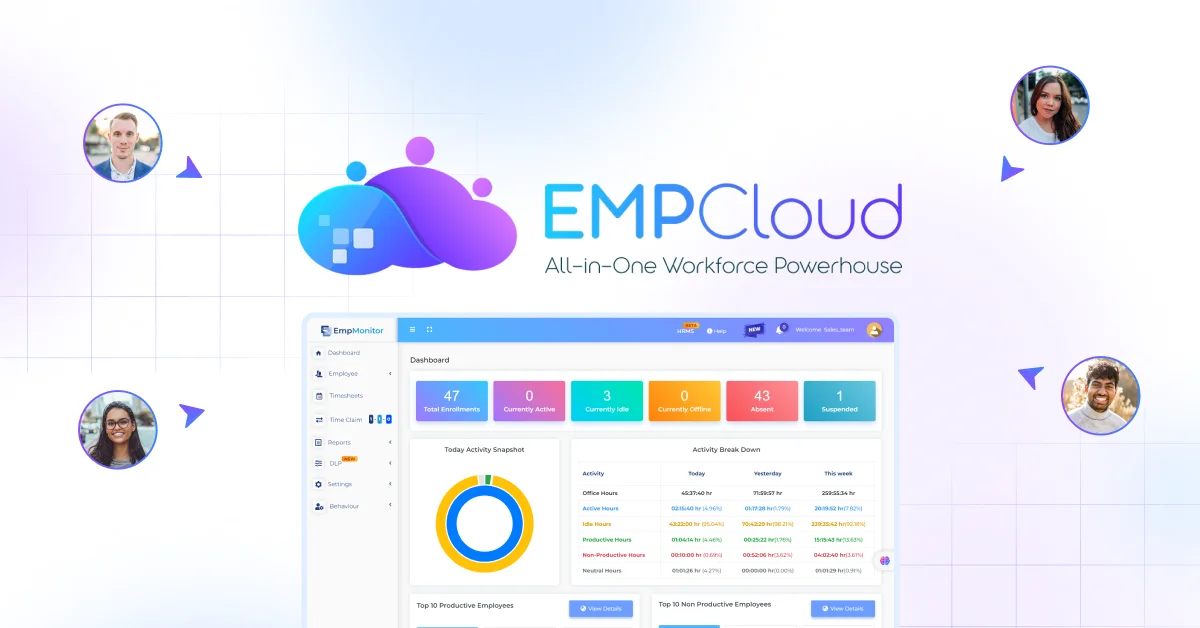
Many companies track employee engagement through basic spreadsheets and fragmented systems, which often create errors and incomplete data. To remove this complexity, organizations are now relying on workforce management software that centralizes information for better accuracy and visibility.
EmpCloud solves this challenge with a unified workforce system designed to elevate productivity and improve workforce control.
Manager-Focused Operational Control
EmpCloud empowers business leaders through:
- Real-time productivity tracking
- Accurate time monitoring
- Geo-location based workforce visibility
- Detailed activity logs
- Project and opportunity management
- Client interaction tracking
These capabilities help organizations map real engagement movement inside teams.
HR-Centric Employee Support Infrastructure
EmpCloud offers:
- Face recognition attendance control
- Automated payroll workflow
- Timesheet scheduling
- Leave & attendance data
- Employee request automation
- Exit management workflows
- Document & policy storage
- Employee access history records
These features reduce HR workload and lift employee satisfaction.
Centralized Performance Dashboard
EmpCloud stores all workforce data in one space, offering:
- Live attendance charts
- Task progress tracking
- Work hour analytics
- Field team monitoring
This centralized visibility gives HR & leadership real-time employee engagement metrics.
Why Employee Engagement Metrics Make HR More Strategic?
Traditional HR worked around attendance and hiring only.
Modern HR uses employee engagement metrics to guide:
- Business planning
- Budget distribution
- Learning investment
- Cultural strategy
This transformation allows HR to build truly people-centric organizations.
Conclusion
Employee engagement is not accidental; it is strategic, measurable, and influential. Every organization aiming for long-term success must review its internal performance using employee engagement metrics. When culture becomes measurable, it becomes fixable. With the right metrics, companies lower turnover, build trust, improve productivity, and enhance innovation.
And if your organization wants real-time analytics, accurate performance tracking, modern attendance systems, field visibility, secure payroll, and centralized engagement dashboards, EmpCloud delivers a complete AI-powered workforce platform designed to transform employee engagement analysis with precision and automation.
FAQs
Q1: How can I measure team satisfaction effectively?
Team satisfaction can be measured through regular pulse surveys, one-on-one check-ins, feedback sessions, and anonymous suggestion platforms. Tracking trends over time provides actionable insight into workplace morale.
Q2: What are some signs of disengaged employees?
Common signs include decreased productivity, lack of participation in team discussions, increased absenteeism, minimal initiative, and reluctance to take on new responsibilities.
Q3: How can technology improve employee motivation?
Tools like task tracking, performance dashboards, recognition platforms, and learning management systems help employees feel supported, valued, and aware of their growth opportunities.
Q4: What role does leadership play in team productivity?
Leaders set the tone for workplace culture. Transparent communication, timely feedback, recognition, and opportunities for skill development directly influence motivation, collaboration, and output.
Q5: How often should employee feedback be collected?
Feedback should ideally be collected continuously through short pulse surveys, quarterly performance reviews, and informal check-ins. Regular feedback helps address issues before they escalate.
Quick Search Our Blogs
Type in keywords and get instant access to related blog posts.