
In A Hurry? Listen Podcast Now!
Why Outsourcing Makes Sense?

We should get straight before we examine some of the examples of outsourcing. Outsourcing is the employment of other people or firms that are outside your business to do some work. It is very simple yet the rewards are enormous.
This is what is worth considering about outsourcing:
- You will save money on salaries, benefits and office space.
- You get access to specialists without having to pass through the protracted recruitment procedures.
- Your team size will be adjusted easily when business is on a boom or a slow down.
- Your core team is able to emphasize on what actually drives revenue.
- Being able to work with other people in another time zone lets you keep things going 24/7.
7 Smart Outsourcing Examples That Actually Work:

1. Customer Service and Support:
If you’ve ever called a company and gotten help from someone in another country, you’ve experienced one of the most popular outsourcing examples out there. Tons of companies, from small online shops to major tech firms, outsource their customer support to call centres or virtual assistants.
Why does this work so well? Because customers expect help at any time of day, and keeping your own team working 24/7 gets expensive fast. By working with support teams in different time zones, you can offer round-the-clock service without burning out your staff.
Many businesses partner with teams in the Philippines, India, or Eastern Europe where they can find skilled, English-speaking professionals at lower costs. The secret to making customer service outsourcing work is good training.
You need to teach your outsourced team everything about your products, how you want customers treated, and when to escalate tricky problems. Get this right, and your customers won’t even notice they’re talking to someone outside your office.
2. IT Services and Software Development:
Tech outsourcing has become incredibly sophisticated and ranks among the most valuable outsourcing examples for modern businesses. Companies regularly outsource website development, mobile apps, cybersecurity, and ongoing IT maintenance to specialists around the world.
This is particularly smart if you’re not a tech company but need tech solutions. Instead of hiring full-time developers for a single project, you can work with development agencies that bring tons of experience and can adjust team size as needed.
Countries like Ukraine, Poland, and India are popular choices for hiring skilled developers who offer great work at reasonable costs. The key to success is clarity and collaboration—know exactly what you want to build, stay involved with regular check-ins, and tackle challenges as a team. Simply handing over requirements and waiting for results rarely leads to the best outcomes.
3. Accounting and Financial Services:
Let’s be honest, most business owners didn’t start their company because they love bookkeeping. That’s why financial services are among the best outsourcing examples for small and medium-sized businesses. You can outsource bookkeeping, payroll, tax prep, and even financial planning to specialized firms.
This makes total sense if you don’t have enough transactions to keep a full-time accountant busy. Outsourced accounting services give you access to experienced professionals who stay up-to-date on tax laws and accounting rules, which means fewer costly mistakes. For businesses that need ongoing guidance beyond day-to-day bookkeeping, working with an experienced firm such as Coleman Financial Group can also provide practical accounting and taxation advice to support better financial decisions as the business grows.
What is the best example of outsourcing in finance? Most companies start by outsourcing basic bookkeeping, then add more complex services like financial analysis and strategic planning as they grow. This way, you get increasingly sophisticated financial help without the cost of building an entire finance department.
4. Content Creation and Digital Marketing:
Content marketing is one of those outsourcing examples that’s exploded in recent years. Businesses regularly hire freelancers or agencies to write blog posts, manage social media, design graphics, produce videos, and optimize their websites for search engines.
Why is this so common? Because creating good content requires a bunch of different skills that probably don’t all exist in your company. You might need writers, video editors, designers, and SEO experts, roles that would cost a fortune to hire full-time but are easy to find through outsourcing. For businesses that want a deeper strategy rather than just task-based help, working with a dedicated SEO specialist such as Aidan Coleman SEO can be a smarter move, since search has become far too competitive for a set-and-forget approach.
Marketing outsourcing also gives you flexibility. Need to ramp up content production for a big campaign? Easy. Slow season coming up? Scale back. This flexibility is incredibly valuable when you’re growing or testing new markets. Many of the most successful outsourcing examples in digital marketing involve companies that started with one or two freelancers and gradually built entire external content teams.
5. Human Resources and Recruitment:
HR outsourcing is another practical example among outsourcing examples, especially if you’re growing fast or don’t have a dedicated HR person. You can outsource recruiting, onboarding, benefits management, payroll, and making sure you’re following employment laws.
Professional Employer Organizations (PEOs) and HR firms can handle everything from posting job ads and screening candidates to managing employee benefits and keeping you compliant. This is especially helpful if you’re expanding to new locations where you’re not familiar with local employment rules.
Which is an example of outsourcing that delivers quick results? Recruitment outsourcing stands out because hiring takes forever and you really need to get it right. Recruitment firms know how to find candidates, screen them effectively, and often fill positions faster with better people than you could on your own.
6. Manufacturing and Production:
Manufacturing outsourcing has been around forever, and it’s still one of the most common outsourcing examples. Companies in fashion, electronics, furniture, and consumer goods regularly outsource production to specialized manufacturers, often in countries where labour costs less.
This lets you focus on designing products, building your brand, and serving customers while someone else handles the complicated work of actually making stuff. The big advantage is getting access to production expertise and equipment without spending millions to build your own factory.
The key to successful manufacturing outsourcing is choosing suppliers carefully, having clear quality standards, and making sure everyone understands what’s expected. Companies like Apple show how powerful this can be, they keep tight control over design and innovation while outsourcing the actual production.
7. Administrative and Data Entry Tasks:
Administrative work might not sound exciting, but it’s actually one of the most impactful outsourcing examples for getting more done. Things like data entry, scheduling appointments, managing emails, processing documents, and booking travel can eat up hours of your team’s time without making you any money.
Virtual assistants can handle these repetitive but necessary tasks for way less than hiring full-time admin staff. This frees up your in-house team to focus on strategic work and activities that actually bring in revenue.
Which is the best example of outsourcing for small businesses? Administrative outsourcing often gives you the fastest payback because it immediately gives back valuable time to your expensive team members, letting them focus on higher-value work that grows your business.
Also Read:
Managing Your Outsourced Team with EmpCloud:
When you have made decisions on what to outsource, you are now confronted with a different challenge of managing people who are not present in your office. It is at this point that employee monitoring software comes in very handy.
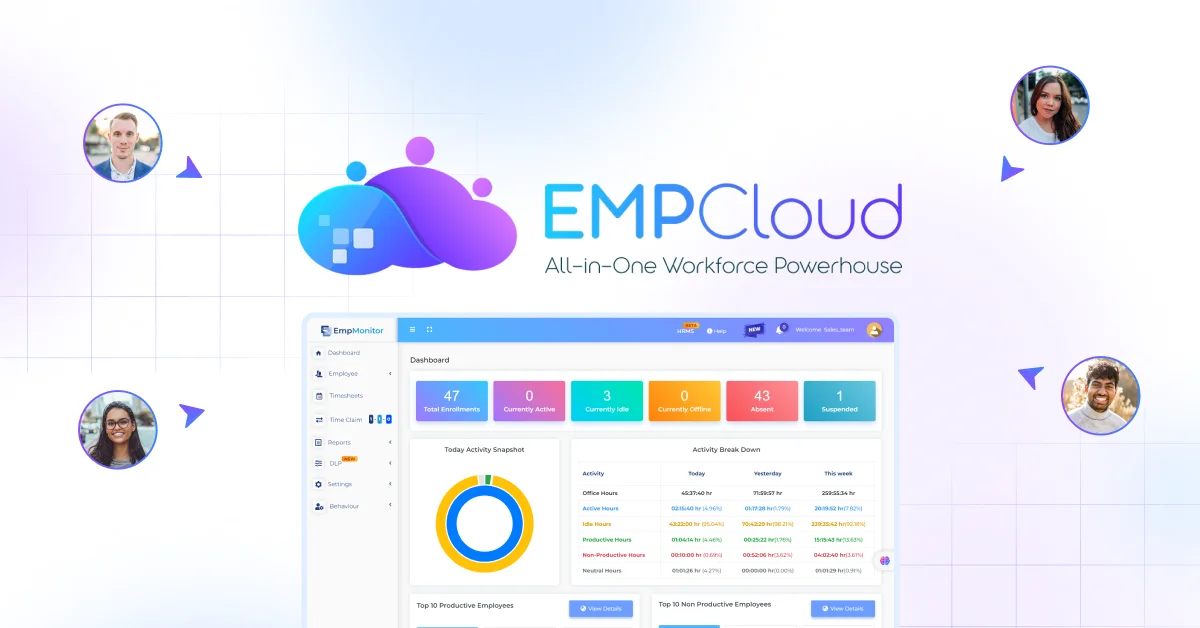
We have the EmpMonitor, the workforce monitoring software, which is part of the EmpCloud suite of tools and is unique to managing remote and outsourced workforce.
Using this tool, you can precisely monitor the amount of work hours being billed in various time zones to ensure your outsourced employees are delivering what they said they would. The platform displays the live activity, hence you can see what people are working on without hovering over them.
That is why EmpCloud can be useful in managing the outsourced teams:
- Automatic time tracking: Eliminates manual timesheets and gives you accurate billing data for contractors. This is super valuable when you’re paying hourly rates.
- Productivity analytics: Help you understand how efficiently your outsourced team works. You can spot patterns, recognize your best performers, and catch productivity problems before they mess up your timelines.
- Screenshots and activity monitoring: Give you visual proof of work, which is especially helpful when your team is in different time zones. You can check progress on your own time without needing constant status meetings.
- Project and task management: Keeps everyone on the same page about priorities and deadlines, no matter where they are. Your outsourced team knows exactly what’s expected and can work independently.
- Detailed reports: Make it easy to track costs, monitor project progress, and show stakeholders what value you’re getting from outsourcing. You can see exactly how your outsourced resources are being used.
The platform is straightforward to use, so your outsourced team won’t waste time learning complicated software. They can jump in and start delivering results quickly.
How to Make Outsourcing Work?

Looking at successful outsourcing examples from established companies is helpful, but you need to follow some best practices to get good results:
1. Start small: Don’t outsource everything at once. Pick one or two less critical tasks first. Once you figure out how to manage outsourced work effectively, you can expand. Study real-world outsourcing examples to see what similar companies in your industry have tried first.
2. Pick partners carefully: Whether you’re hiring freelancers or agencies, do your homework. Check references, look at their previous work, and test them with a small project before committing long-term. The difference between successful and failed outsourcing examples often comes down to choosing the right partner.
3. Be clear about what you want: Write detailed project descriptions, check in regularly, and define what success looks like. Your outsourced team can’t read your mind.
4. Build real relationships: The best outsourcing relationships aren’t just transactions. Take time to understand your partners’ strengths, challenges, and how they work. This creates better collaboration.
5. Use the right tools: Employee monitoring software, project management platforms, and communication tools are essential for working with outsourced teams smoothly. Good technology makes distance irrelevant.
6. Protect your business: When outsourcing involves sensitive information, make sure you have proper agreements in place to protect your intellectual property.
7. Check quality regularly: Don’t assume everything’s fine. Regular quality checks and feedback help maintain high standards and catch problems early.
Learning from Both Good and Bad Outsourcing Examples:

It is important to learn on the example of both successful and not successful outsourcing so that you can be successful yourself. When you study various outsourcing experiences of your industry, you would notice what did go wrong more than what did go right.
The experience of many companies has taught some very costly lessons which you can learn by taking a look at them.
Be sure to avoid the following frequent pitfalls that are recurrent in warning outsourcing cases:
- Making the low cost choice and being indifferent to quality.
- Failing to be clear with what you want.
- Subcontracting what has proven to be your competitive advantage.
- Lack of a combined strategy in case the outsourcing relationship fails.
- Managing at the most minor level rather than emphasizing outcomes.
- Overlooking cultural dissimilarities that influence communication.
The best examples of outsourcing can be the ones that start with some minor steps, then correct the errors and change their course. You do not have to learn everything by yourself; you can learn of other people who have been through this road before.
Wrapping Up:
The outsourcing cases that we have discussed demonstrate the ways in which corporations in all spheres employ external proficiency to reduce expenses, to have customized expertise and to expand more rapidly.
Be it in terms of customer service and software development or manufacturing and administration work, smart outsourcing will allow you the benefit of concentrating on what you are most adept at doing and leaving the rest to capable partners. Outsourcing success does not consist in getting the lowest price, but in determining what to outsource, choosing partners effectively, and managing the relationship effectively.
Outsourcing can indeed take your business by a storm with the right equipment, proper planning and clear communication through workforce monitoring software.
FAQ’s:
Q1: Is the best example of outsourcing different for every company?
Ans: Yes, what you should outsource depends on your business. For start-ups, customer service and admin tasks are usually the best starting points because they save time immediately without requiring much management.
Q2: Is outsourcing only about saving money?
Ans: Not at all. While lower costs are great, outsourcing also gives you access to experts you couldn’t afford to hire, flexibility to scale quickly, and freedom to focus on your core business.
Q3: How do I decide which functions to outsource?
Ans: Look for tasks that take lots of time but don’t directly make you money or give you a competitive edge. Also consider outsourcing work that requires specialized skills you don’t have in-house.
Q4: Do all industries outsource?
Ans: Pretty much every industry can benefit from outsourcing, but tech companies, online retailers, professional services, and manufacturers have the most developed outsourcing options available.
Quick Search Our Blogs
Type in keywords and get instant access to related blog posts.