
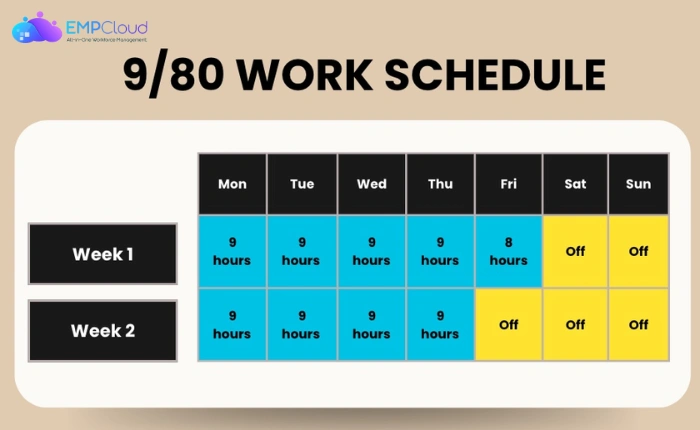
Modern workplaces are changing at a breakneck pace. As employees strive for a better work-life balance and employers seek to boost productivity, flexible work arrangements are stepping up as a compelling solution. One model that’s really taking off is the 9/80 work schedule. This innovative approach condenses the typical 80-hour biweekly workload into just nine working days instead of the usual ten.
This schedule promises better work–life balance, improved productivity, and a predictable routine. If you’re considering adopting or switching to a 9/80 work schedule, this comprehensive guide will help you understand how it works, why it’s effective, and how to maximize results.
In a hurry? Listen to the blog instead!
What Is A 9/80 Work Schedule?
Before exploring optimization strategies, let’s understand the system itself. Many people ask what is a 9/80 work schedule, and the answer is straightforward:
A 9/80 work schedule is a compressed arrangement where employees work 80 hours over 9 working days within a two-week period. This enables them to enjoy one full Friday off every alternate week. Instead of working five eight-hour days per week, employees work:
- Eight days of nine hours
- One day of eight hours
- One scheduled day off
This builds what is often called the every other Friday off schedule, offering more personal time without affecting total work hours.
How Does A 9/80 Schedule Work?
Many organizations want clarity on how does a 9/80 schedule work, especially when planning shifts, payroll cycles, and compliance.
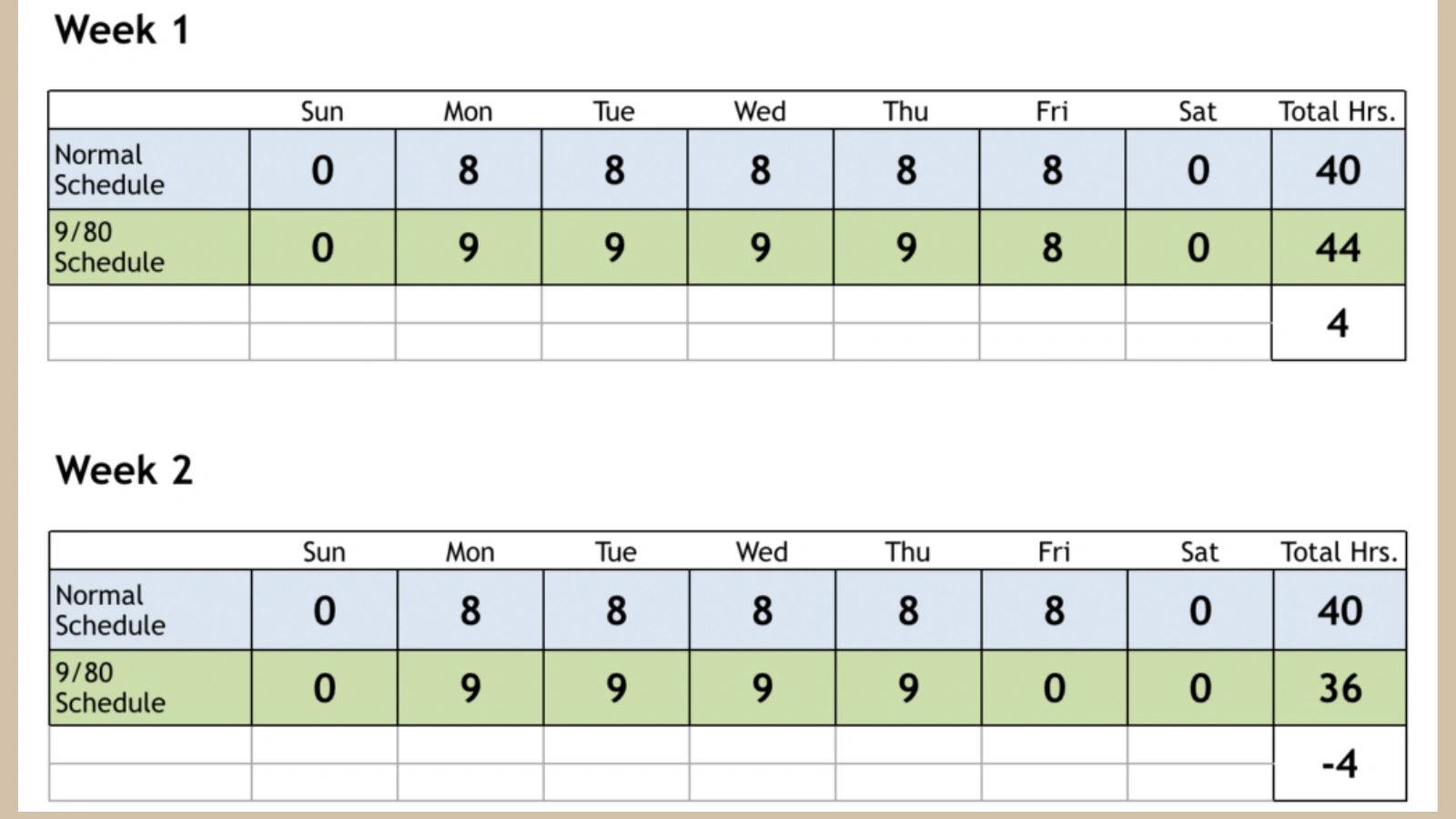
Here’s a simple breakdown of the two-week cycle:
Week 1
- Monday: 9 hours
- Tuesday: 9 hours
- Wednesday: 9 hours
- Thursday: 9 hours
- Friday: 8 hours
Week 2
- Monday: 9 hours
- Tuesday: 9 hours
- Wednesday: 9 hours
- Thursday: 9 hours
- Friday: Off
Within this system, Friday is usually split between the first and second workweek for tracking purposes. This structure keeps overtime consistent, work hours compliant, and scheduling predictable.
Some organizations refer to this setup as a work schedule 9/80 because it creates a fixed, balanced cadence.
Why The 9/80 Work Schedule Is Growing In Popularity?
Employees today want greater control over their time, mental health, and work environment. The 9/80 work schedule, especially when implemented as a 9/80 flex work schedule, supports these needs while maintaining productivity. Companies adopting compressed schedules often notice several key benefits, especially when paired with effective process improvement strategies that boost workflow efficiency.
Higher employee morale:
Employees feel valued when their employer offers flexibility. The extra day off every other week gives them a sense of freedom and control, which directly boosts overall job satisfaction and workplace positivity.
Reduced burnout:
Longer weekends allow employees to fully recharge. By spreading the same number of working hours across nine days instead of ten, the schedule naturally reduces fatigue and helps prevent the buildup of stress.
Improved focus:
With fewer interruptions and more structured time blocks, employees find it easier to concentrate on deep work. The 9/80 setup encourages productivity because workers return from their extended break more energized and mentally refreshed.
Enhanced retention:
Employees are more likely to stay with companies that support healthy work-life balance. Flexible arrangements like this reduce turnover and attract talent who prioritize wellness, autonomy, and modern work practices.
Additionally, employees get an extra day for personal errands, travel, rest, or recreation. With predictable long weekends, the 9/80 work schedule creates a healthier work rhythm.
Also Read:
How To Implement Effective Process Improvement Strategies?
Benefits Of A 9/80 Work Schedule For Employees
This alternative work arrangement gives employees more control over their time while maintaining full productivity. It creates a healthier weekly rhythm, reduces stress, and offers meaningful personal time.
Here are the key benefits:
1. Longer, Predictable Weekends:
The biggest advantage is that every alternate Friday becomes a free day. This helps employees recharge, travel, and better manage life commitments.
2. Improved Work–Life Balance:
Without sacrificing pay or hours, employees gain additional personal time. Over the course of a year, this adds up to 26 extra days off beyond regular weekends.
3. Increased Focus on Working Days:
The natural motivation of “earning a Friday off” encourages better time management and reduced procrastination.
4. Reduced Commute Stress:
By eliminating one commute day every two weeks, workers save time, money, and mental energy.
Benefits Of A 9/80 Work Schedule For Employers
Employers considering is a 9/80 schedule worth it will find that the advantages often outweigh the challenges.
1. Higher Productivity:
Longer workdays help employees dive into deep-focus tasks, reducing the frequent context switching seen in shorter shifts.
2. Reduced Absenteeism:
Built-in long weekends naturally lower stress levels, resulting in fewer unplanned leaves and better overall attendance.
3. Stronger Employee Loyalty:
Offering modern, people-centric scheduling signals trust and flexibility—qualities that help attract top talent and significantly improve retention.
4. Better Operational Predictability:
Compared to fully flexible setups, this structure keeps teams aligned, enabling smoother coordination for meetings, deadlines, and cross-functional activities.
Additionally, adopting this model becomes even easier when supported by the right technology. Many organizations streamline processes by using platforms like Empcloud, which automates time tracking, centralizes workforce data, and provides real-time productivity insights. With tools such as an integrated executive dashboard, leaders gain a clear overview of attendance patterns, workforce utilization, and team performance trends.
With accurate attendance records and unified dashboards, managers can handle extended workdays and alternating Fridays off far more efficiently, ensuring both flexibility and operational clarity.
What Challenges Can Arise With A 9/80 Work Schedule?
While this structure is highly effective, it does bring a few potential hurdles that companies must address thoughtfully.
- Longer Workdays: Nine-hour shifts can feel demanding for employees, especially in roles involving manual tasks or constant on-ground activity. Teams may require better workload planning to avoid fatigue.
- Team Coordination: When different departments follow alternating Friday-off cycles, syncing meetings, deadlines, or collaborative tasks can become complicated without proper scheduling systems in place.
- Compliance Considerations: Companies need to correctly split Friday hours to remain compliant with overtime rules in their region. Any miscalculation can create payroll errors or legal concerns if not handled carefully.
- Client Expectations: External partners or clients who expect regular Friday support may require alternate coverage plans, ensuring service continuity even when some employees are off.
Despite these challenges, organizations can overcome them with thoughtful planning, and by using smart workforce platforms like Empcloud, which helps manage attendance, monitor productivity, and streamline the entire 9/80 structure for smooth, compliant operations.
How To Know If The 9/80 Work Schedule Is Right For You?

A compressed schedule is ideal for individuals who:
- Prefer longer weekends
- Can manage longer workdays
- Want predictable flexibility
- Thrive on organized routines
It might be less ideal if your role requires irregular hours or if you struggle with extended daily workloads.
Industries That Commonly Use The 9/80 Work Schedule
Industries that benefit most from focused, project-driven work tend to adopt this model:
- Engineering
- Technology
- Government agencies
- Corporate offices
- Creative sectors
These sectors find that the 9/80 work schedule improves output and employee well-being.
Also Read:
How To Use Executive Dashboards To Make Better Decisions?
How Employers Can Implement A 9/80 Work Schedule Successfully?

Transitioning to this format requires clarity, structure, and the right tools. When approached correctly, it can elevate productivity and employee satisfaction across the organization. Here’s how employers can implement it effectively:
Evaluate Job Requirements:
Begin by assessing whether your team’s responsibilities align with longer workdays and alternating Fridays off. Customer-facing, shift-based, or high-intensity roles may need modified arrangements to maintain smooth operations.
Communicate Expectations Clearly:
Clearly outline how hours will be tracked, how Friday splits work, and what employees should expect on their on/off Fridays. Transparent guidelines prevent confusion and set the tone for a successful transition.
Train Managers and Team Leads:
Supervisors must understand how to monitor hours, approve time logs, and manage workloads under this system. Proper training ensures fairness and consistency across departments.
Use a Pilot Phase:
Start with one department or a small group to observe real-world challenges and gather insights. A pilot helps refine policies before rolling them out company-wide.
Leverage Workforce Management Software:
Using advanced platforms like Empcloud makes a major difference. Automated attendance, real-time productivity tracking, geo-location data, and centralized dashboards help managers track extended shifts accurately and maintain compliance with ease.
Review and Optimize Regularly:
After implementation, gather employee feedback, monitor performance trends, and adjust the system where needed. Regular evaluation ensures the schedule continues to work for both teams and business goals.
With thoughtful planning and the support of smart workforce tools, employers can integrate this model smoothly and unlock its full benefits.
What Mistakes Should Be Avoided When Setting Up A 9/80 Work Schedule?
Implementing a compressed workweek requires careful planning. Avoiding common pitfalls can make the transition smoother and more effective for both employees and managers. Key mistakes to watch out for include:
- Poor timekeeping systems: Without accurate tracking of hours and Friday splits, scheduling errors and payroll issues can arise.
- Lack of communication: Failing to clearly explain expectations, schedules, and responsibilities can lead to confusion and frustration among teams.
- No overlap planning for Friday-offs: Ignoring the need for coverage or handoffs when different employees take alternating Fridays off can disrupt workflows and client service.
- Not automating timesheet management: Manual timesheets increase the risk of errors and administrative burden, reducing the efficiency benefits of the 9/80 schedule.
- Ignoring employee feedback: Not gathering or acting on input from staff can lead to dissatisfaction, lower morale, and decreased productivity.
By proactively addressing these issues, companies can implement the 9/80 model successfully while maintaining productivity, clarity, and employee satisfaction.
Tips For Employees To Maximize Results With A 9/80 Work Schedule
Working longer days under a 9/80 schedule can be highly productive if approached thoughtfully. Here are four key tips:
- Plan Breaks Strategically
Short, regular breaks throughout nine-hour days prevent fatigue, boost focus, and help maintain consistent energy levels. - Use Time-Blocking Techniques
Organize tasks around peak productivity hours. Tackle high-focus work in the morning and schedule less intensive tasks for later to stay efficient. - Stay Hydrated and Energized
Longer workdays require conscious wellness habits. Drink enough water, eat balanced meals, and stretch occasionally to stay alert and reduce stress. - Prepare for Your Friday Off
Plan your extra day in advance for rest, personal projects, or errands. Using it strategically ensures maximum recovery and enhances work-life balance.
The Psychological Impact Of The 9/80 Work Schedule
Studies show that longer weekends improve memory, focus, and emotional well-being. Employees working under the 9/80 work schedule often report:
- Better mood stability
- More creativity
- Lower stress levels
- Higher job satisfaction
The regular break becomes a mental reset that boosts week-to-week performance.
How Empcloud Enhances The 9/80 Work Schedule Experience?
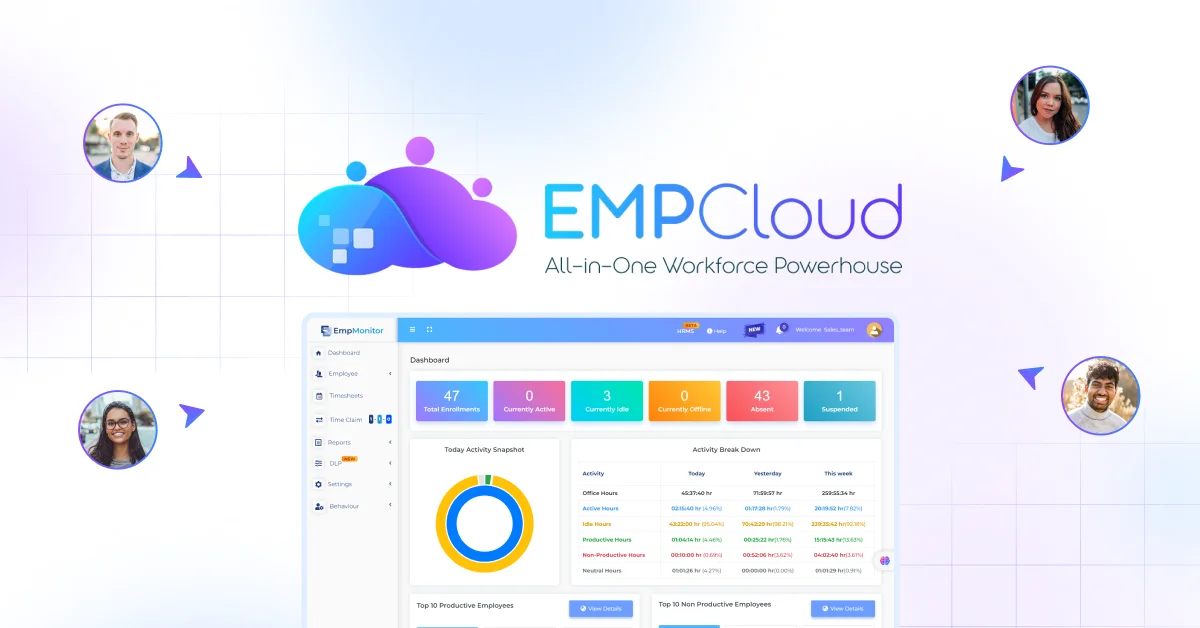
Implementing a compressed schedule requires accuracy, transparency, and consistency. Empcloud, trusted by over 1500 industry leaders, offers an all-in-one workforce ecosystem that simplifies the entire workflow.
Empcloud blends Manager-Centric and HR-Centric tools to support both employees and leadership teams throughout the 9-day cycle.
Key Features That Support A 9/80 Model
Time Tracking & Automated Timesheets:
Accurately monitor nine-hour workdays and alternating Fridays off. Automated timesheets reduce errors, save administrative time, and ensure payroll remains precise and consistent.
Task & Project Management:
Assign, track, and optimize tasks efficiently during extended workdays. This helps teams stay organized, prioritize work, and meet deadlines without overloading employees.
Productivity Monitoring:
Gain real-time insights into employee performance and task completion. Managers can identify bottlenecks, allocate resources effectively, and maintain consistent productivity across the compressed schedule.
Leave & Attendance Tracking:
Simplify management of Fridays off, compensatory shifts, and leave requests. This ensures accurate scheduling, prevents conflicts, and helps employees and managers plan workloads effectively.
Face Recognition Attendance:
Contactless attendance ensures secure and reliable tracking of employee hours. It minimizes manual errors, speeds up check-ins, and supports compliance with company policies.
Centralized Workforce Dashboard:
Provides a comprehensive overview of attendance, tasks, and performance in one place. Managers can make informed decisions, track progress, and maintain smooth operations under a 9/80 work schedule.
Empcloud turns the 9/80 work schedule into a high-efficiency, low-confusion experience for both employees and decision-makers.
The Future Of Work With A 9/80 Schedule
As more companies adopt flexible models, the 9/80 work schedule is emerging as a sustainable hybrid between traditional and modern systems. It supports employee well-being, reduces turnover, and boosts productivity, all while maintaining structural predictability.
With technology like Empcloud enabling smarter workforce insights, this schedule will likely grow even more popular across industries.
Final Thoughts
The 9/80 work schedule is a powerful solution for companies wanting to modernize their work culture without compromising productivity. It provides stability, flexibility, and improved morale. When paired with an intelligent workforce platform like Empcloud, businesses gain the clarity, automation, and real-time insights needed to manage longer workdays and rotating Fridays off with ease.
If your goal is to maximize efficiency while supporting employee well-being, the 9/80 work schedule, backed by Empcloud’s unified management system, can be a highly effective model for the future of work.
FAQs
1. Is it possible to implement a 9/80 work schedule for part-time employees?
Usually, the 9/80 work schedule is tailored for full-time employees since it involves working 80 hours over the span of nine days. For part-time workers, a modified approach might be necessary to fit in fewer total hours each week while still enjoying the perks of compressed workdays.
2. What’s the impact of a 9/80 schedule on overtime pay?
When it comes to overtime under a 9/80 schedule, it really hinges on local labor laws and the specific policies of the company. Typically, overtime is calculated based on any hours worked over the standard 40-hour week, rather than the nine-hour daily shifts. However, organizations need to ensure they’re compliant to prevent any payroll mishaps.
3. Can teams that interact with clients use a 9/80 work schedule?
Absolutely, but it does take some thoughtful planning to ensure that client needs are met. Implementing staggered schedules or having rotational Fridays off can help maintain consistent service levels while still allowing employees to enjoy the benefits of a shorter workweek.
Quick Search Our Blogs
Type in keywords and get instant access to related blog posts.